Monday, July 5, 2021

Don't Wait to Write

 How many writers have trouble getting started with writing a book?  A good many! Beginning a book can seem overwhelming or it can also seem very simple when the first page presents itself, but then the next words won't come.  Why can't YOU get a book started?

Before you say you can’t start that first draft until you have the perfect first line and first few paragraphs, my advice is don’t worry about that. You will never get your book written if you worry about making everything perfect as you go along. No, the purpose of the first draft is to get the story on the written page. I can’t say it enough--the first draft doesn’t need to be perfect. Once you have started writing, you may go back later and find that the perfect line was contained in your first paragraph. You just didn’t put it in the right place. But at least you wrote it, and now you have it for the future.

 The point is getting started writing. You can do it.

 First let me begin with the simple statement that there is no right or wrong way to write a book. What I try to give you are ideas and options and even if some of what I offer are the so called “rules,” when it comes to writing, each author is different and must choose the best course for him/her to get the book written.

For me, each book I write is different and I often end up writing different books different ways. Like my characters all my books have individual, unique personalities. In some cases I was able to turn out a book in three months, at other times it took several years as I went back and changed and perfected things. In one case, I kept the characters and put them in different circumstances. The second version of that book was the first book I sold.  In another case, I kept the premise but totally re-wrote the book. I first wrote it twenty years ago around a certain idea. When I looked at it later I still loved the idea, but the writing was horrible. I tossed out the entire manuscript but it eventually did get written and published.

 Look for what works best for you and use that. There are no magic formulas. But I will repeat the statement that unless you get something down on the page, you will never finish the book, and that is where the first draft comes in.

Thriller writer Bob Mayer says don’t worry about how awful that first draft might be, anything can be edited or fixed. Nora Roberts says you can’t edit what isn’t written. Janet Evanovich says the great things about first drafts is that this is the one time in your life you don’t have to be perfect.

 So let’s consider what you do need to be aware of in writing that first draft. What should you keep in mind as you write it--terrible or not.

The first draft can be as detailed or as sparse as you want it. Ask around and authors will give you a variety of different ideas on how they write their first draft. Some will want it as detailed as possible. As I’ve written in previous classes, some authors like Suzanne Brockman consider their detailed outline as their first draft.

Others turn in their first draft as the finished product. Again, look for what works best for you and then write it that way.

Some things you do want to set up in your first draft:

1. Characters -- give as much detail as you can. Keep in mind you can always remove things or move them around and place them later in the story.  I always name all my characters, even the minor ones with the idea that I can change their names later if I don’t like them. If you’ve done your story charts you should have a good idea of who your characters are by now and  they might surprise you as they begin to take shape in story form.

2. Setting -- provide a good idea of where and when your story is taking place. Again you can go back later and use that to give you an idea of what you want to include in your story. This is especially true if you are writing fantasy. You will need to provide a good picture of the world your characters inhabit. If you include some of that detail in your first draft you can always look for ways later to spread out the description over pages so that it doesn’t all come at once in one big information dump.

3. Premise -- you do want to get the story problem introduced early in the story so look for ways to do that in your first draft. Again, you can fix details or move things around later as long as you begin to define what your story is about. If you have written up your plot with plot points, an outline or story board, or even have a general idea of where you’re going, you should be able to bring it into play to get the story going.

If you do have a detailed outline, you might even want to begin with that and then just expand it, just as Suzanne Brockman does. As I’m mentioned before, you might also start with your plot points and then write the scenes around each of them and start stringing them together or do the same with chapters.

Those are the things you need to look to include in your first draft. What don’t you need to worry about:

1. Don’t worry if your first draft is not complete or if you don’t include things. If you get toward the middle and you realize there were story plot lines or elements you should have placed up higher, you can always make notes to include those things or scenes in editing. Sometimes I keep a separate word file where I’ll make a point of things to fix in the re-write or second draft. 

2. Don’t even worry about your spelling on that first draft. Again, you can always run spell check later.

3. Don’t worry about coming up with just the right phrase or perfect metaphor. That is what editing is for. Again, you can spend time thinking things through during the re-write or edit. Sometimes I find myself surprised at how well written some of the sentences are in my first draft. Other times I cringe -- did I really say that?

4. Don’t worry about showing this first draft to anyone--whether it be a critique group, your husband/wife, mother or sister/brother. You can, of course, but keep in mind, it is a rough draft, meant to be fixed. Don’t take their criticism as a death knell to your work.

5. Don’t worry about how long it takes you. Some writers can churn out ten to 20 pages a day. Others struggle to get one done. Again, keep writing. It’s the only way you will get the story on paper.

6. Forget the past. Don’t start to panic if you feel that your new book sounds just like that last story you wrote, or if you’re re-using phrases that you loved so much last time. Again, this is what editing is for.

7. Don’t obsess on page counts. As I noted before, some writers are faster than others. The point is to keep going. You may also find that some days you too can turn out huge amounts. On other days you might have to pull the words out of your pocket!

8. Don’t keep revising and revising. Yes, sometimes it pays to go back through the last five pages when you start out the next day, but read them over and make minimal changes. Use that read over to re-acquaint yourself with where you are going. What you don’t want to do is get fixated on “fixing” those pages. It can cost you your spontaneity and you’ll find yourself constantly re-writing instead of moving forward.

And while we’re discussing writing and re-writing, let me bring up another trap many beginning writers fall into.

The Three Chapter Fixation

One of my writing friends had a thing about entering contests. As a result she had her book outlined and a synopsis written, but she didn’t go much beyond writing the first three chapters. She kept rewriting them to get them perfect in order to win or final in a contest. Then when she would get feedback from the judges, she would rewrite those chapters again and re-submit to more contests. In the end, she finally gave up trying to write a novel because she could never finish the book. However she did final in numerous contests. She even won a few.

Another friend (who did eventually get published) kept rewriting her first three chapters to submit to agents and editors. She did the same process as the above friend who was entering the contests. She would receive feedback and then try to re-write to the agent or editor recommendations (when she got them -- most of the time she simply got rejections). Luckily she did keep improving her writing and in the end she didn’t complete her novel until someone asked for the full manuscript. Then she wrote that first draft in two months. Of course it was rejected, but she had a finished product and then she was able to edit and eventually sell it.

Don’t get caught in that situation. It’s wonderful to polish those first three chapters for contests or to submit, but don’t get fixated on them. The morale of both these stories is that contests and submissions are great, but you won’t get published until you have a full book to offer and that is where first drafts come in. A first draft is still a full book and a starting point. 

The bottom line of writing your book is you can't finish it if you don't start writing the story. Enjoy the summer and let's get some writing done! Any comments or questions? Please visit my websites at Rebecca.Grace.com or for more writing tips, visit Writethatnovel.net 

Monday, June 28, 2021

Delivering on the Writing Promise

This week as I started to work on this week’s blog, I came to a startling revelation. While I am always worried about what I  can write about to help writers as I also introduce other writers, I realized I have fallen victim to something I am always telling other writers not to do – over commit! As a result I find myself editing one contracted book while editing another and teaching a writing class with another coming up soon. But that brought me to the realization that as writers we need to keep in mind what goes into writing a book and how we might be able to keep from overcommitting or losing sight of what the ultimate goal is – to write a good book.

We all want to  deliver our best work to editors, the public or readers, and overcommitting can become a real problem. As a writer it would be fun if all you had to do was sit down at the keyboard or with a paper and pen and compose great fiction or nonfiction, but the finished product is never that simple. There are always other things that go into the mix of writing a good book. 

Research

2.     Planning the Plot

3.      Developing Characters

4.      Writing Scenes

5.      Editing

6.      Marketing

7.      Planning the Next Book

And all of that is only the beginning. Each one of those elements can contain a series of steps of their own.

Gathering research can be time consuming and how much is too much? I always tell beginning writers in classes that I teach that when in doubt, go with what feels right to you. Yes, you can over-research but as time goes on you will find what works for you and what doesn’t and what you actually need and will use.  The danger of research is that too often I have found writers who get so caught up in getting every single little detail right that they spend all their time researching instead of writing. Get the information you need for this story and save the rest for later.

Planning the plot can be one of the most fun elements of writing a story, but what if you decide to simply write off the top of your head? I admit that is what I often do. My book, Desert Blossom began with a simple premise from the popularity of online chatrooms where people were meeting online before ever seeing each other. 

Like so many other books, the idea for it just came to me and I started making up characters and situations from a simple what if? Can two people who have never met physically think they are falling for someone they have never seen but communicate with daily? The story was off and running on a simple question.

I can make all the plotting charts in the world, but I’m guaranteed to have one of my characters go off in another direction as the story moves along and suddenly everything falls into chaos. For me it is easier to write the story and let it flow along naturally. So, yes I am one of those intuitive writers who basically writes by the seat of my pants or what is also known as a “pantser” as opposed to a plotter. 

The book I am currently editing, Deadman’s Treasure, has a heroine who completely stole my heart as a minor player in my book Dead Man’s Rules and made me want to write about her story. Freeda Ferguson was fully developed before I started writing the current book, but only because she had come to life in the first book and I wanted to know more about her and what made her who she was. Freeda's story has been contracted by The Wild Rose Press, so it should be released in the near future.

Many writers who plan carefully will make up all their character charts ahead of time.  When I write organically, I will start writing and then go back and fill out the character chart after my character has taken form on the written page. Either way can work.  Charts are great to have and keep so that you can easily check your character’s eye color or preferences and not end up with a brown eyed heroine on one page and a green-eyed heroine on the next.

That’s where that necessity of editing really comes in.  Making up a quick character chart, even after you’ve written her/him into the story is a good idea so that the characters don’t change in mid-stream. You can check back as you edit.

Don’t scrimp on the editing either. It can make all the difference in the world. Just one quick read through after writing the first draft is not enough. This is where critique partners or Beta readers can come in handy. They can point out some of the little things that you might have mixed or question elements of your story that might need clarification.

While writing a book can seem overwhelming, simply sitting down and getting started can make all the difference in the world.

1.      Get those characters on paper with a character sketch.

2.      Write a scene that shows your characters or defines the problems

3.      Write a scene of dialogue that illustrates who your characters are

4.      Write a description of a room or setting or place so that you can get the idea in your head

5.      Write the beginning scene

6.      Write the ending scene

You don’t need to do all of these things in this order, but often just doing that can get you started on your story. I’ve been known to write that ending scene first (just as I used to sometimes read the last page of a book after the first chapter)

The better you know your story and characters, the better.

Happy writing!

Any comments or questions?

Visit my Website at RebeccaGrace.com or Write That Novel.net

Sunday, June 20, 2021

A Writing Combination

 Twenty years ago I met a Colorado author who has made quite a difference in my life and in my writing career. I was introduced to Sue Viders at a meeting of a Denver romance writers’ group and that meeting has made a big difference in my life and in my writing.  I knew Sue’s name before I met her. Her early book, Heroes and Heroines on  archetypes was a book many would-be romance writers considered a “must” read if one wanted to write a successful romance, and I had also taken several of her writing classes. ,

After meeting in person, Sue and I soon became critique partners and then as our friendship progressed we discussed how much we both enjoyed learning the writing process as well as teaching it. 

. Before long we were not only helping each other with our individual fiction works, but we were also teaching classes together and then while we were both  pursuing our own fiction careers together, we decided to write non-fiction and fiction together. 

We are the exact opposite in so many ways, but that combination worked wonderfully when we began writing together. She is very focused on details and structured writing while I go off into the ozone all the time., The combination works well, because so many writers don’t fall into just one category. As frequent teachers, we also realized we could help writers of all different types – the structured, by-the-book writer and the writer who flies off into the ozone to create a story organically by instinct.

From the first, we also both agreed there are certain things every writer needs to know  Years of both of us teaching and working with fiction writers has demonstrated to us how differently writers approach the creative process, but the final goal is to provide a book that is readable and interesting to the reader. The result of what we’ve learned over the years about the different types of writers is available in our new co-authored non-fiction book, Writing Tips for All Types of Writers

What are the differences? Some writers choose to plan every detail, while others write instinctively. Another group uses a combination of both techniques.

The result of that knowledge made us want to write a book of writing tips that could speak to both types of writers as well as those who used both techniques.

1 - Plotting/planner writers

2 - Intuitive/instinctive writers

3 - Hybrid/combination writers

If you’re not certain about which type of writer you are, we suggest you can try all the different tips we offer until you find the one that best suits you.

Not certain of what each means? Here is a breakdown:

The planning and plotting writers are like Sue. They want the characters defined and determined in advance. She also makes up character charts and writes down a defined plot all the way down to what is contained in each chapter before she starts the writing process.

The non-plotter is like Becky. That sort of writers like to let the character show themselves on the written page. Becky writes the book but keeps a list of those descriptions and vital information as she is writing. Then ,as she is editing she makes certain those elements stay true to the book itself.

The hybrid writer does both. They start out with a vague idea of what they want in a character and write that down, but leaves room for the character to develop or change.

Both know that some writers also use a combination of both methods. Fiction writers must choose for themselves how they want to write their book, but the process usually falls into one of these three categories.

The key element in all of these methods is to keep track of what you’re putting into the book. The character who starts one way at the beginning may grow and change, but that change doesn’t happen overnight. The development occurs inside the pages of the book.

At one point, after teaching  writing classes separately and together for years, Sue and Becky decided to sit down and share their learning with other beginning and developing writers. The result was a new book of writing tips.

Whether you are a seat of the pants author, a carefully planning author or the type who uses a combination of approaches, the tips can be of help.

As one of their students recently told them, “I wish I’d had that book when I was starting out.”

For anyone looking for help, the book is now available on Amazon.

Oh, and we have also made it through writing a new fiction book which should be published soon. Yes, we used the planning approach together, as well as the “seat of your pants” approach to get it written. The book is in the editing phase, and it’s only the first fiction work in this collaboration between a planner and a non-plotter. The two can work together -- even for two very different writers.

For more on Sue and Becky's books:


To get our new Tips book on Amazon:


Any questions or comments

Sunday, June 13, 2021

The Challenge of Writing

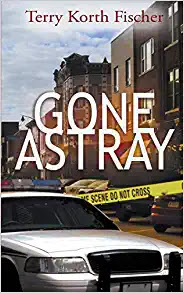
We're reaching those warm days of summer when it's fun to sit outside with a great book. I spent many a summer afternoon and early evening sitting in the shade or on the patio  reading when I was young, and it's a habit that has stayed with me ever since. Of course, to do that, you always have to be in search of the next great read, and that's why I'm always looking for new authors and new books to enjoy. Today's guest in My Writing Corner, Terry Korth Fischer sounds like she is writing just the sort of books I enjoy that would be perfect for those long summer evenings of reading.

 Terry writes mystery and memoir. Her memoir, Omaha to Ogallala, was released in 2019 and her  short stories have appeared in The Write Place at the Write Time, Spies & Heroes, and numerous anthologies. While she is from the Midwest, Terry now lives in Houston with her husband and their two guard cats. She tells us she enjoys a good mystery, the heat and humidity, and long summer days.  I wanted to know more about her thoughts on writing.

What are some of the challenges of being a writer?

There are always challenges: phone, Internet, family, bathing. But seriously, writing isn’t the obstacle. It's self-doubt. I don’t know a writer who doesn’t wonder if their current manuscript will measure up. Does it need one more beta reader? One more edit? Many times, I mentally revise a scene after submission—pesky night thoughts.

Tell us about your road to publication.

I spent six years writing Gone Astray. For the first four years, I had a full-time job. My focused writing began after retirement. That said, I knew I wanted a traditional publisher. The process of finding an agent and publisher through query and achieving publication can take years to accomplish. I gave it a whirl but didn’t feel I had that kind of time. Luckily, I met my publisher at a writers conference. The Wild Rose Press, a small press with a stellar reputation, can take a writer from submission to print in months. I queried them, received a contract, and voila! Gone Astray was released in February 2021.

 How do you come up with your characters?

Developing characters is one of the fun elements in writing. There is so much freedom. A character can be anything, do anything, and get away with actions a real-life person wouldn’t dream of attempting. But it can also be daunting if you want a multi-faceted, believable, relatable character for your readers. I like to use the personality of someone I know well and tweak it to fit the profession and temperament of a character that will enhance the story I’m telling. In Gone Astray, Rory Naysmith has many traits I saw in my dad, and the rookie, Thacker, was modeled after my adopted brother.

 Tell us about your latest book, Gone Astray.  What made you write it?

Detective Rory Naysmith, the protagonist in Gone Astray, takes a job with a small-town police department after a life-altering medical event. He sets out to prove his career isn’t over. Unfortunately, he’s a crusty, curmudgeonly sort; technology and a series of escalating crimes will get the best of him unless he learns to alter his perspective. Sorry, no spoilers.

A heart attack sends detective Rory Naysmith reeling. Too young to retire, he accepts a position in small-town Winterset, Nebraska. Handed an unsolved truck hijacking case, with the assistance of a rookie, Rory sets out to prove he is still able to go toe-to toe with younger men. When the body of a Vietnam veteran turns up, he dons his fedora and spit-shines his shoes. But before he can solve the murder, an older woman disappears, followed closely by a second hijacking. He doggedly works the cases, following a thread that ties the two crimes together.  But can Rory find the mental and physical strength to up his game and bring the criminals to justice before disaster strikes and he loses his job?

The novel received an excellent review that said, “This is probably the first coming of age book for a character who is fifty.” I didn’t set out to write a coming-of-age novel, but I had watched my husband and a work colleague struggle with their identities after undergoing heart surgery. So, I feel like the advice to write what you know worked for me.

 I’ve read a kazillion mysteries over the years. Then one day, I thought, I can do this. What I like is a puzzle, not too much sex, or violence, or foul language. And characters that are engaging and who I want to see win. So that is the kind of book I set out to write, and as I said earlier, voila!

What advice do you have for beginning writers?

Don’t give up; it’s the only difference between a published author and an unpublished one.

What’s your next project?  

A second Rory Naysmith mystery is in the final draft, and a third is percolating. I love these characters; they have become my best friends. But, of course, that could be the new stay-close-to-home mentality speaking. But honestly, if I have to spend months, or years, with a story, this is the crew for me.

 If you would like to get a copy of Gone Astray, here are the buy links:

Gone Astray Buy Links: (jpg attached)

Amazon Buy Link: https://amzn.to/2LHnlYI

B&N Buy Link:  https://bit.ly/3q5h4Wh

If you would like to know more about Terry and her books, here is the contact information. 

Visit her website at https://terrykorthfischer.com


Thank you, Terry for being my guest this week. Any comments or questions for Terry?


Sunday, June 6, 2021

A Visit to A Faraway World

Writing one book can be challenging, but think about those authors who write a series! It means not simply one commitment, but several -- to characters to plot to coming up with distinctive stories that all work together. Today's guest in My Writing Corner is Lyndi Alexander who has written several series. She says she always dreamed of faraway worlds and she has made them come alive in her stories.. 

She tells us she lives as a post-modern hippie in Asheville, North Carolina and is a single mother of her last child of seven, a daughter on the autism spectrum. She says she finds that every day feels like first contact with a new species. Since she has written a number of series, and I am currently teaching a writing class on how to write a series, I asked her to answer a few questions on this difficult endeavor as she tells us about her latest book.

What is the most challenging thing about writing a series? 

I find that the hardest thing for me is to begin the second book or third book with enough information for a new reader to get into the story, without over dumping info. An author can never know whether the person who picks up the book knows anything about the rest of the series. I’ve managed it so far by switching to a more objective third party as first-chapter narrator. That narrator can put their own spin on what’s happened so it’s not just regurgitation. 

How do you keep track of all your plotlines and your characters?

While the overarching stories of a series may continue through consecutive books, I try to have each book wrap up some part of the situation. For example, in the Horizon Crossover series, HORIZON SHIFT is the story of Captain Rogers’ arrival into a new universe via wormhole, and what he needs to do to refurbish his ship and rebuild his crew. HORIZON STRIFE goes on with his struggle to fit in the new place he’s found and his run-ins with the government Agency and the mysteries of the Ancients. HORIZON DYNASTY allows both stories to wrap up as well as various triumphs of minor characters in furtherance of their own destinies. This keeps me from having to remember everything about everyone and keep the drama active throughout multiple books.

I then had an idea using a few of the tangential characters in the trilogy, and thus we have SIXSHOOTER, which is part of the series by virtue of having a similar setting of the star system in which all these characters operate. The action happens somewhat simultaneously.

What is most rewarding about writing a series?

Definitely I think that readers enjoy a series—continuing to discover more about the characters and their adventures. It is a self-fulfilling way for your audience to stick with you. When I first got into reading science fiction, I picked up one of Anne McCaffrey’s Dragonflight books. She created so many of these (followed up by her son) that I had steady reading material for years. Plus, as an author, it grants your wish to keep on with people you’ve loved to create. It’s hard for me to let go of my favorites!

Let's hear more about  Sixshooter:

Valeni Pascual wants to be free to make a living hauling cargo with her spaceship and to understand the shapeshifting alien who presents sometimes as the steamy male Nik and other times as the blonde bombshell Nikki.

As a rebel insurgence builds against the oppressive government known as the Agency, Valeni and Nik/Nikki encounter a sexy Terran cowboy named Garrett Rawls. Since being pulled into this region of space by another mysterious wormhole, Garrett has looked for a way to return to Earth. After meeting Valeni and Nikki, he might have found something worth staying for.

 However, dark forces may have a much bigger picture in mind for all of them. Valeni, Nik/Nikki, and Garrett are pulled into a life and death fight that lays bare all of their secrets and their desires. Will they lose everything as the battle against the Agency rages around them or can love pull them through?

SIXSHOOTER [©2021] A Horizon Crossover series novel by Lyndi Alexander | Cover Art by Kat Hardy | Science Fiction Romance (R) 280 pages / 100,000 words | Available in ebook and print from the DFP Books label of Dragonfly Publishing

Print editions are available at Amazon, Barnes & Noble, and more. Find ebooks at retailers, lending libraries, and subscription services, including: Amazon Kindle, Apple Books, Barnes & Noble, Blio, Kobo Books, Open Library, Overdrive, Scribd, Smashwords, and more.

 If  you would like to know more about Lyndi and her books, here is her contact information and where you can buy her books: 

Author Links

Website  and Blog            https://lyndialexander.wordpress.com/

Facebook                            https://www.facebook.com/lyndialexander13/

Goodreads                          https://www.goodreads.com/author/show/4185290.Lyndi_Alexander

Amazon Author Page

https://www.amazon.com/Lyndi-Alexander/e/B005GDYPU2/ref=dp_byline_cont_ebooks_1

Bookbub:                             https://www.bookbub.com/profile/lyndi-alexander

Smashwords | Lyndi Alexander    https://www.smashwords.com/profile/view/lyndialexander

 Thank you, Lyndi, for being my guest today. Our cats send their best to all your cats!  Any questions or comments for Lyndi?

Monday, May 31, 2021

Writing through the Summer

This has been a trying year for all of us. With Co-Vid changing our lives so drastically, sometimes it feels like our whole world has moved to another universe. It can be hard to write in our pretend world when the world we live in seems more like fiction than reality. And that can lead to a problem that hits all of us at one time or another as writers. Sooner or later we hit the wall with our writing and we suffer through that old , well-known, feared syndrome called “writer’s block.”  We fear it, we try to hide from it, we fight it, but more often we give in to it.

So what do you do when it hits you?  Do you fight it? Do you give in to it? Lots of people say they know when it hits them and they try to shrug it off and get back to their writing.  For others those blank, empty days of staring at the computer screen or playing games or just ignoring the latest work can start to pile up until they fear they will never write again. It's even worse when the world around is also a little different than the world we had a year and a half ago, and we are very uncertain about the future.

When writer’s block visits me, I try not to give in, but with each passing day I don’t write I find the fear that I’ll never write again. That in itself can drive me back to the keyboard to prove that I can still tell a story, whether it’s a fiction work, or just a blog on not being able to write.

Here are some ideas for coping with writer’s block:

1.      Write something – anything – this is something I usually try first. If I find myself unable to face my characters and my latest stories, then I do work on a blog or try writing a lecture for one of my writing classes.  Sometimes by doing that I find new inspiration for the fiction story I am working on. Often when teaching a writing class I find that reading over what some of those other students are doing makes me want to work on my own writing.

2     Look over old stories – this is always a good way to get something finished. By reading an old story that I started several months ago, I find myself with new ideas that I hadn’t thought of before – maybe even something that had given me writer’s block and stopped me back when I was working on this story. If there is something that was stopping me in my current story, I can just set it aside and work on those old things and maybe get something done. Usually finishing a work will propel into the next book or story. I've been doing that anyway this month as I work on edits for the sequel to my book Dead Man's Rules. I just signed a new contract with my publisher, The Wild Rose Press,  for the second book in that series so I am going back through not only the first book, but my ideas for a third book to finish off the trilogy. 

3.      Get away from your desk and try write somewhere else – a change of scenery can be like a breath of

fresh air. Sometimes just sitting at your desk every day can seem like drudge work. I am a big fan of going to a restaurant or coffee shop with a note book and writing long hand for a while. Then when I go back to my computer and transcribe the pages it spurs me on. Of course I have also been known to take my computer to a library or coffee shop to write. Sometimes the change in scenery and just getting away from the house can spur creativity.  These days that choice may be dicey, but since the weather is so nice as we head toward summer, it might be a good time to try a park, or even sitting outside in the backyard with your computer. I've often done that. Fall is best for me, but summer evenings outside or even in the shade can be great!

4.      Try a plotting brainstorming session – I love to do this with friends or a writing group. We will sit and toss story ideas around and I either jot them down or put them into the notes feature of my iphone. That way I have the ideas to refer back to later. I use this especially if I run into a knotty plotting problem that needs extra help. People love to play with story ideas when they don’t have anything invested other than offering their opinion.

5.      Have a dialogue with characters – sometimes I realize that my characters are either not fully formed or I don’t know them as well as I thought I did so they are refusing to take those next plot steps. That can lead to a dead stop to the plot. I just can get that next scene written. Often a little conversation with those characters can pull out a new idea or make  me realize just what is ailing that character. Then after a while I find myself getting back on track.

Sometimes it just takes getting away from things for a while. I will put something down and let it sit. Sooner or later those characters will start yelling and I’ll have to come back and finish their stories.  I’m never sure what stops me from writing, but I know any or all of these things can pull me back. Sooner or later that will lead to THE END getting written!

These days some of these techniques can work and can even be stress relievers as well. After all, in the world you are creating at the keyboard, YOU know what will happen. You are setting the boundaries and getting to make all those decisions. It's YOUR world and YOU are fully in charge!  

Sunday, May 23, 2021

A New Beginning

Today's guest in My Writing Corner is one of those writers you always want to meet because they always seem to be on the go. Whether it's a new project or a teaching experience, well, she always seems to be busy in the writing world--so busy she works under several names.  

BETH HENDERSON tells us that she spent a dozen years writing and rewriting the same three books during the 1980s. Well, all those rewrites did pay off with a romance spinning career that is now 31 years long. 

Contemporary romantic-comedy and 19th century historical romantic adventure are her forte. In writing

historical fiction, in particular, she tells us that she likes to add mystery, which which her new book, Until . . . clearly shows. 

As J.B. Dane she writes urban fantasy PI mystery comedy. As Nied Darnell it's Weird West Steampunk, 1920s Dieselpunk adventure comedy, and 1880s Victorian Gaslamp mystery comedy. 

As Beth Daniels she is a frequent online fiction writing workshop presenter with Savvy Authors and various RWA online chapters. This month she celebrates 31 years since her first novel was published. Until . . . is her 30th romance but the 32nd published title. There are already three other completed manuscripts waiting for their turn in the spotlight.

When Talmadge Hammond drifts into the Idaho mining camp he has no intention of using his law degree. He’s there for whiskey and the gold he can win at cards. Instead, he must save the life of the woman who’d once vowed to love him until…


Noletta Kittridge begins that day covered in a man’s blood and accused of murder. She has sinned to stay alive. Redemption can come only by giving her life to save the person who accidentally killed the man. Even Tal’s reappearance in her life can’t revive Letty’s will to live.

Determined to keep her from the hangman’s noose, Tal must either convince her to tell who did kill the victim or solve the mystery himself. If he fails, he and Letty will finally reach that unvoiced destination beyond until…

Want more?  I did, so I asked Beth if I could interview Talmadge. He sounds like one of those characters we won't soon forget.

What do you want most out of life?  (what is your current goal?) 

Once I would have said what I wanted my life to be would have been a successful life as a lawyer in Boston that included a wife I couldn't wait to go home to and probably children. Then I met Noletta Kittridge and fell in love. The career was going great but her parents were holding out for a son-in-law from their own level in society, not some nobody from a small town who was making waves in Boston's legal circles. Then the war came and rather than get swept up in a conflict where I didn't agree with either side, I left Boston, headed for Canada and points west. Letty lacked the courage to run away with me though she told me she'd love me "until..." Two years have gone by since then. Thought I'd never see her again. Then I walked into a scraped together mining camp in Idaho Territory and there she was -- freshly covered in a man's blood and accused of murder. What I want most out of life right now is to prove her innocent and save her life.

What frightens you most about being involved with ??(the heroine/hero) 

What scares me most is the fact that I know she knows the identity of the real killer and won't give their name up to save herself. If I can't sort through what facts I've gathered and discover the name on my own, Letty goes to the gallows and I'll be helpless as so-called justice is delivered.

What do you find most appealing about her/him?

As irritating as it is considering the herculian job ahead of me, I can't help but admire her gumption in being ready to sacrifice herself for someone who, although they shot a man dead, she believes has more reason to want to live than she does and isn't giving them up. Back in Boston, it was her beauty, her spirit, her intelligence that I admired. But this is a different woman, one who has gone from the heights in Eastern society to surviving in the wilderness by joining the only profession open to her, that of a soiled dove. It's forged a new element in her makeup, one that was probably lacking in it before. Yeah, it irritates the hell out of me, but it also makes me damn proud of her. 

Thank you, Talmadge, and a big thank you to Beth for introducing us to her latest book! If you want to know more about her and her latest work, here are the links:

Website: 4TaleTellers.com

Facebook: www.Facebook.com/BethHendersonBooks

Twitter: @Beth__Henderson

Buy Links: 

Amazon https://amzn.to/32tl2xA

BnN https://www.barnesandnoble.com/w/until-beth-henderson/1138919963?ean=2940162596769

Apple https://books.apple.com/us/book/until/id1556173060  

Kobo https://www.kobo.com/us/en/ebook/until-4

Again, thank you for being my guest.  Are there any questions or comments or questions for Beth?


A Happy Ending – Hopefully!

After years of writing this blog and featuring authors who have new books being published, I have decided the time has come to end my weekly...